
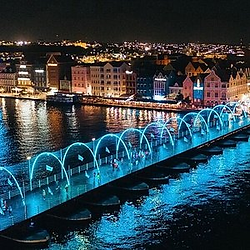


Queen Emma Bridge
Curaçao's Floating Icon
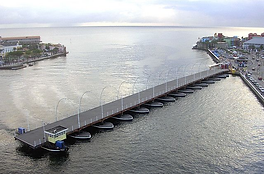
Queen Emma Bridge, locally known as "Swinging Old Lady", is an iconic floating pontoon bridge 168 meter long located in the heart of Willemstad, the capital city of Curaçao.
This historic bridge not only serves as a vital transportation link but also stands as a symbol of unity, connecting diverse cultures and bridging worlds.
History
Queen Emma Bridge was originally constructed in 1888 and was initially a floating wooden bridge. In 1939, it was replaced with a modern, floating pontoon bridge, which is the one we see today. The bridge is named after Queen Emma of the Netherlands, who reigned from 1879 to 1890 and was greatly admired for her charitable work and dedication to the people of Curaçao.
Unique Features
Queen Emma Bridge is one of the few remaining floating pontoon bridges in the world. It swings open on hinges to allow ships to pass through the St. Anna Bay, providing a spectacular sight for locals and tourists alike. The bridge is exclusively used by pedestrians, making it a bustling thoroughfare for exploring the vibrant streets of Willemstad.
Cultural Significance
Queen Emma Bridge serves as a cultural landmark, symbolizing the historical and social fabric of Curaçao. It reflects the island's rich multicultural heritage, with influences from Dutch, Spanish, Portuguese, African, and Indigenous cultures. Locals and visitors alike gather on the bridge to soak in its panoramic views, engage in lively conversations, and celebrate the vibrant spirit of Curaçao.
Visit Queen Emma Bridge
Experience the unique sensation of walking across the floating bridge as it sways gently with the ocean currents. Explore the colorful architecture, quaint shops, and bustling markets of Willemstad's UNESCO World Heritage site. Capture stunning photographs of the bridge against the backdrop of the picturesque Caribbean Sea.
Crossing the bridge
When Queen Emma Bridge is open to allow ships to pass through the St. Anna Bay, pedestrians have several options for crossing: Ferry Service, Watertaxi or If time permits, pedestrians can simply wait on either side of the bridge until it swings back into place and reopens for foot traffic.


Blenchi
Free as a hummingbird
The hummingbird also known as blenchi in papiamentu (papiamentu is the most widely spoken language in Curaçao) is a beloved and iconic bird on the island, known for its vibrant colors and rapid wing movements.
It's often admired for its agility and beauty and holds cultural significance in local folklore and traditions.The hummingbird embodies resilience, beauty, vitality, and spirituality, gracefully depicted on the 10 guilder bill, symbolizing Curacao's rich cultural heritage, natural abundance and also reminding people of their own strength and perseverance in the face of obstacles.
Freedom
The hummingbird symbolizes liberation and independence. Its presence in Curacao's ecosystem reflects the island's own journey toward freedom and autonomy. It also serves as a reminder of Curacao's journey to freedom from the shadows of slavery, while also honoring the island's profound historical roots in the struggle against slavery.ResilienceDespite their small size and fragile appearance, hummingbirds are incredibly resilient creatures. They are capable of enduring long migrations, surviving harsh environmental conditions, and thriving in diverse habitats.


